San Souci, R. (1992). Sukey and the mermaid. New York: Four Winds Press. Sukey finds friendship with a mermaid, who comes to her after she runs from her chores. Not wanting her to get in trouble the mermaid provides Sukey with a gold coin to give to her mother and mean stepfather. This continues until her parents learn of the mermaid and attempt to catch the mermaid. After falling ill from being worked too hard, Sukey is visited by the mermaid in her dreams. Sukey spends several years with the mermaid underneath the sea, but longs for human contact. The mermaid reluctantly returns her along with a dowry. Her stepfather plots to steal her dowry, before she can marry the only that the mermaid says she can marry, Dembo, who the stepfather kills on the day of the wedding. Pleading for help from the mermaid, she receives a pearl that will bring him back to life. Alive again, Dembo points the finger at the stepfather, he runs away on the sea where he is swallowed whole. Disappointed by the the loss of their treasure, Dembo and Sukey are just happy to be together. Only the mermaid has one last gift, her dowry. As I read this story, I was reminded of a story that I heard while on tour of the Charleston area. If I am remembering correctly, they talked about people in the water, but I think they were referring to the people that had died in the water. I especially liked the illustration by Brian Pinkney, which were created using a scratchboard technique. Reminded me of my days in art class, although I never created anything as beautiful as this. 1993 Coretta Scott King Award Illustrator Honor | 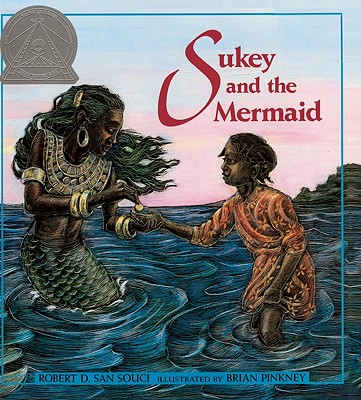 |
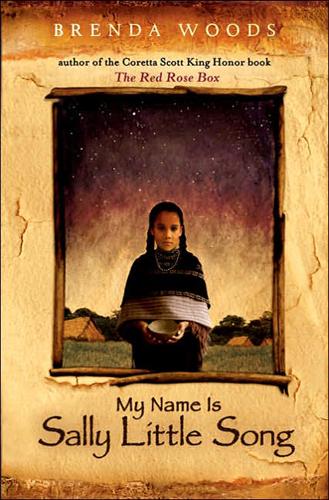 | Woods, B. (2006). My name is Sally Little Song. New York: G.P. Putnam's Sons. Born a slave on the Harrison plantation in souther Georgia, Sally May and her family lived on worked in the cotton fields. To pass the time, Sally May's mother teaches her that singing will help pass the time away. Bright and a quick learner, Sally May could count and knew that she would be able to teach herself to read. After being summoned to the big house to dust, Sally May is accused by another slave of trying to read, for which she is whipped. It shortly after this that Sally May and her family had to flee the plantation, afraid that the master would soon be selling Sally May and her brother to the master's brother's plantation. Instead of heading north, Sally May's pa is convinced to go south and seek the help of the Seminoles. After losing her mother to the jaws of an alligator, Sally May and her family are found by the Seminoles who celebrate her pa's bravery after they learn he killed the alligator. Despite the struggles of being in a new place without her mother, Sally May and her family find a new home and a new name, Little Song. In the author's note, I learned more about the beginnings of the Seminoles. The chief in the story alludes to the fact that they separated from the Muskogee Nation, creating a separate group that melded into the Okefenokee Swamp. They often bought slaves from the Spaniards or assisted them in living a life free of slavery. The Seminole believed that no man belonged to another and as such, in their communities, runaways found the freedom that they were seeking. It was interesting that Sally May argued with her brother that there was no such thing as black indians, which is an unfortunate response from most today. It good fictional piece to pair with Black Indians by William Katz. |
Nelson, M., & Hegamin, T. (2008). Pemba's song: A ghost story. New York: Scholastic Press. After losing her father to the Iraq War, Pemba's mother moves them from Brooklyn to Colchester, Connecticut, where she is will begin a new job. Angry and lonely, Pemba is angry about the move to a town with only four traffic lights and their new home, which was built during the 1700s. To cope with her anger and loneliness by writing in her journal, where she writes her poetry. Strange encounters with an eighteenth century slave girl,Phylls, lead Pemba on a quest to find out why the slave girl has made a connection. Through a series of poems, we learn of Phylls' fate and we watch Pemba come to understand the true meaning of her name- the force of present existence. Pemba's Song was an enlightening experience. It was my first paranormal read and I throughly enjoyed the inclusion of Pemba's and Phylls' poetry. It was wonderful to see a story where a young girl comes into her own and is curious enough to want to help someone she doesn't even know. In the authors' note, we learn that there really is an Abraham, one of the characters in the the story. His story parallels that of his character in the book. Colchester, Connecticut and the Colored School are also real places. | 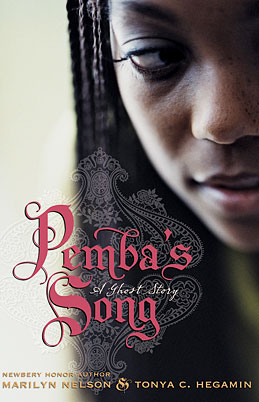 |
 | Bolden, T. (2005). Maritcha: A nineteenth-century American girl. New York: Abrams Books for Young Readers. A biographical accounting of a nineteenth-century girl living in New York City. The story is based on memoirs written by Maritcha, an African American who grew up free during the days of slavery. It tells of her struggle to attain an education, through illness and segregation. It also tells how with the help of a family friend, petitioned the Rhode Island state legislature to be allowed to become the first African American at Providence High, where she was the first African American to graduate. While the accounting only includes Maritcha's childhood, the author does provide a note that summarizes the later years of her life. Included in the pages are photographs of her family and friends, maps, illustrations and family papers that have been donated to the Schomburg Center for Research in Black Culture. Maritcha's story provides us with an insider's view of what life was like for a free African American family during slavery, a portrayal that is not often presented. We are able to see the struggles that the family has to endure during the late 1800s in order to survive. Her story also always students to see that African Americans were successful, owned business and were educated. 2006 Coretta Scott King Award Author's Honor |
Nelson, M. (2005). A wreath for Emmett Till. Boston: Houghton Mifflin Company. When fourteen year old Emmett Till visits family in Mississippi from Chicago during the summer of 1955, he supposedly whistled at a white woman. Her husband and brother-in-law took offense to this and lynched Emmett. His mother ordered an open-casket funeral for all of the world to see. A further outrage is the acquittal rendered by an all white male jury of the murders. In one of the key events that helped to spark the Civil Rights Movement, Emmett Till's story is presented in a Petrarchan sonnett along with beautiful images created by Philippe Lardy. Paired with the author's notes, this is a very moving collection of sonnets of an unforgettable time in the America's story. 2006 Coretta Scott King Award Author's Honor 2006 Michael Printz Award for Excellence in Young Adult Literature Honor Book | 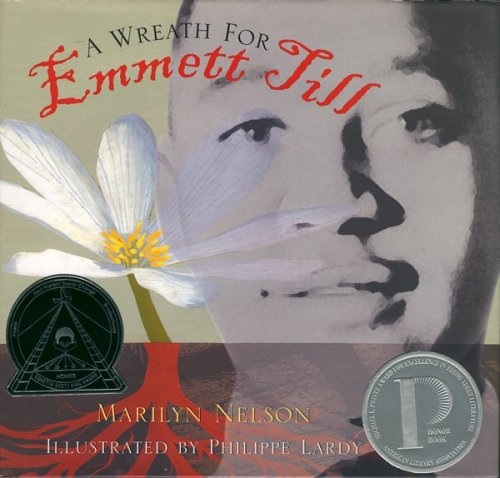 |
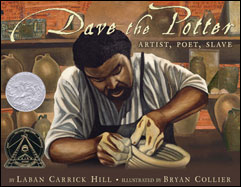 | Hill, L. (2010). Dave the potter: Artist, poet, slave. New York: Little, Brown and Company. A talented potter, Dave is shown creating his masterpieces through this beautifully written poem. Dave, who was enslaved in South Carolina during the 1800s produced tens of thousands of pieces of pottery. More amazing is the inscription of bits of pottery, the date and or his name appear on these creations. In doing so, he defied all those who were want to not have slaves know how to read or write. The story of Dave the potter, as presented by Hill is very well written and leaves the reader wanting to know more about him. the illustrations created by Bryan Collier are beautiful and provide us with a look into the life and times of Dave Drake, as he was later called. In conducting further research on Dave the potter, I was intrigued to learn that he created so many pieces of pottery, some of which still remain in existence today. It is sad to say, that these pieces are in the hands of private citizens, to be bought and sold and not on display for all to appreciate. 2011 Coretta Scott King Award Illustrator Winner Caldecott Honor Book |
Feelings, T. (1991). Tommy traveler in the world of black history. Black Butterfly Children's Book. A graphic novel that tells the story of Tommy Traveler. After exhausting the available literature of the Black experience in his library, the librarian directs him to Dr. Gray who has an extensive collection that he shares with Tommy. Tommy reads the story of six historical personalities at a pivotal time in their lives. After reading their story, he finds himself a part of the story. As he time travels, he meets Phoebe Fraunces, Emmet Till, Aesop, Frederick Douglass, Cripus Attucks, and Joe Louis. I like the comic book format of these biographies. They provide children with an opportunity to meet six historical personalities in a fun format. | 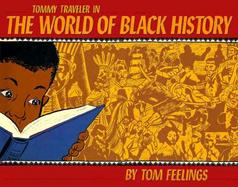 |
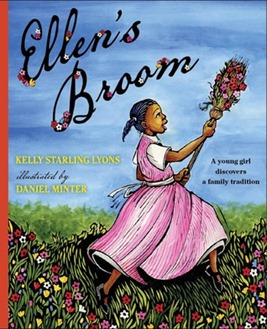 | Lyons, K. (2012). Ellen's broom. New York: G.P. Putnam's Sons. In Ellen's house, the broom has always held a special place. At the end of slavery, word has come that African American marriages will now be considered legal. Ellen's parents join others to go and have their marriage recorded. Together, they bring along the broom as they head down to the court house. Seeing others finely dressed, Ellen and her sister add flowers to the broom and give it to their parents to hold as their marriage is recorded in the book, along with their names and ages. On the way home, the family sits and has lunch and Ellen asks her parents to show them how to jump the broom. Her says that that was in the past and they did not have to do that anymore to be considered married. Disappointed, Ellen wants to see them anyway. Reluctantly, they do it and Ellen announces that she will she jump the broom when she gets married. The broom has long been a symbol of weddings in the African American community. This story is a good way to introduce children an African tradition and one of the things that came out of Reconstruction, the legalization of marriage for former slaves. |
Katz, W. (1986). Black indians: Hidden heritage. New York: Aladdin Paperbacks. An enlightening look at a little discussed part of American history. From the arrival of the first African in Americas, there has been an alliance between them and the natives. Africans have longed for their freedom and were able to find refuge in the Native American communities. Intermarrying and living amongst the Native Americans, Black "Indians" helped to shape the fabric of America. I learned of yet another facet of the African American story. And while the Black "Indian's" story is not unknown to me, Katz's accounting provides a sometimes awkwardly written story that should be shared with all and included in our history books. | 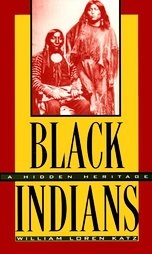 |
