Rohmer, H., Chow, O., & Vidaure, (1987). The invisible hunters: A legend from the Miskito Indians of Nicaragua. A very interesting tale of three hunters, who happened to be brothers, that learned the secret of the magic vine, Dar. The magic vine gave the hunters invisibility. But in order to use the power of the vine the hunters had to promise two things: never sell the wari, the wild pig, and to give away all they killed and never hunt the wari with guns. The hunters promised and became great hunters, celebrated by all of the villagers. Over time, their fame reached beyond the village of Ulwas on the Coco River in Nicaragua. Strangers came to the village offering to buy the wari. Initially the brothers refused, but over time, the lure of money became too great and they gave in. Eventually, the brothers broke both promises to Dar and began to refuse the hungry villagers the meat of the wari. One day, they went hunting and returned to the village. Instead of welcoming they usually received, the villagers backed away from them. They did not see the hunters, but floating dead wari. Dar had made it so that the villagers remained invisible. Despite their pleas, Dar refused to restore and the village elders banned them from the village. As I read this story, I was reminded of the story of the Africans who sold their brethren into slavery. The illustrations are very interesting. They are paper cutouts placed on painted backgrounds. | 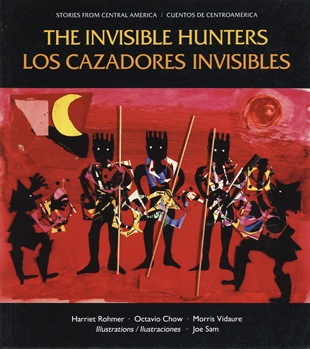 |
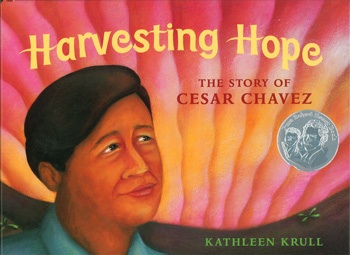 | Krull, K. (2003). Harvesting hope: The story of Cesar Chavez. Orlando: Harcourt, Inc. A biographical account of Cesar Chavez and the work that he did for the improvement of farmer workers' rights. Beginning with accounts of his childhood on the family ranch near Yuma, Arizona. With so many family members around, Cesar enjoyed his life on the ranch. During a drought that wilted the farm, the Chavez family was forced to relocate to California in hopes of earning enough money to repurchase the family farm. However, with such meager earnings, all hopes of regaining the family farm were dashed. His new life in California was dismal and Cesar longed for his old life. Instead, he was forced to work the fields to help put food on the family table. With a transient life, Cesar was able to complete the eighth grade before being forced to dropout. In the years that followed, Cesar began to want more from his work as a farm worker. Disenchanted by low wages and and worse living conditions, Cesar found a peaceful way to protest. Leading workers from Delano to Sacramento on a peaceful march, Cesar was able to gain better working condition for the farm workers. Cesar became a celebrated persona in the farm working community. A wonderful story of the famous Mexican American, Cesar. A good book to include for use in the third grade social studies curriculum. The illustrations, created with a mixed use media of acrylic, computer generated cutouts and hand made stamps are colorful and engaging. A Pura Belpre Honor Book |
Cumpian, C. (1994). Latino rainbow. Chicago: Children's Press. An introduction to the Latino community and their contributions to the America. The author introduces us to Louis Feurtes, Bernardo Vega, The Ronstadt family of Tucson, Luis Alvarez, Dr. Hector Garcia, Ritchie Valens, Tito Puente, Cesar Chavez, Roberto Clemente, Carlos Cortez, Joan Baez, Reies Tijerina, Antonia Novello, Henry Cisneros, and Ellen Ochoa. He also provides historical information on the California rancheros and the Treaty of Guadalupe Hidalgo. We also also given insight into how the Cubans and Central Americans came to be in America. A very enlightening piece. I learned so much about the Latinos in America, how they came to be in America. I didn't even know that Linda Ronstadt was Latino. The poetry is very easy to read and comprehend. The illustrations are also very well done. Created using oil on canvas, the illustrator captures the essence of the Latinos' rich heritage. I really enjoyed this easy to read history lesson of Latinos in America. |  |
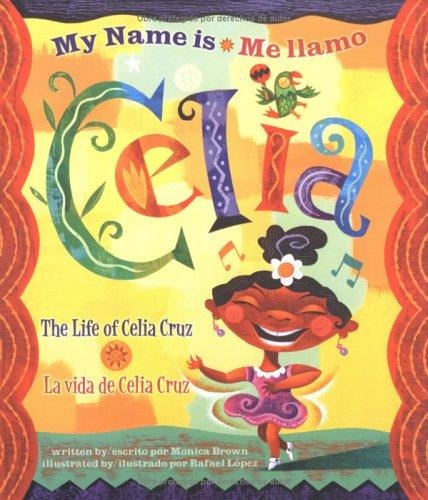 | Brown, M. (2004). My name is Celia: The life of Celia Cruz. Flagstaff: Luna Rising. A story of the Queen of Salsa, Celia Cruz. The story, which is told in first person, takes us on a journey through Celia's life. Beginning in Havana, Cuba, Celia details her family life, how she cultivated a love of music, and how she left Cuba for New York, during the revolution. Never forgetting her heritage, Celia continued to pursue her love of music, introducing the world to salsa. This book is written in both English and Spanish. The illustrations are vibrant and alive, much like I imagine she would have been in life. Americas Book Award, Pura Belpre Honor Book |
Pico, F. (1991) The red comb. Troll Medallion. The story of a young girl, Vitita, who offers assistance to a runaway slave. While the climate in her village supports returning slaves to their masters in return for a reward, sina Rosa, the village midwife and healer believes that they should not be party to such practices. When Vitita discovers a runaway slave is stealing eggs, she does not say anything to anyone but sina Rosa, who suggests that she leave food and other items, among them a red comb, for her in the mango tree. Over time, she leaves different items for the woman, until Pedro Calderon, a fellow resident who has made a good living off handing over slaves to the local authorities, attempts to capture the runaway slave. Seeking assistance from sina Rosa, Vitita and sina Rosa foil all of his attempts. Discouraged, Pedro decides to forget about the runaway. Eventually, the runaway marries one of the villagers and Vitita lives to tell her grandchildren of the story of sina Rosa Bultron and the red comb. An excellent accompaniment to a unit on slavery that tells the story of slavery in Puerto Rico. Students will be able to draw parallels between runaways in other parts of the world and those on American soil and that there were people everywhere willing to help those attempting escape from slavery. Skipping Stones Honor Award for Multicultural Children's Literature. | 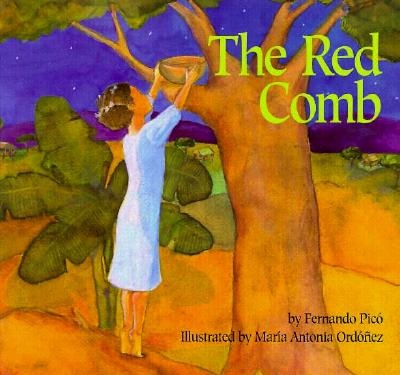 |
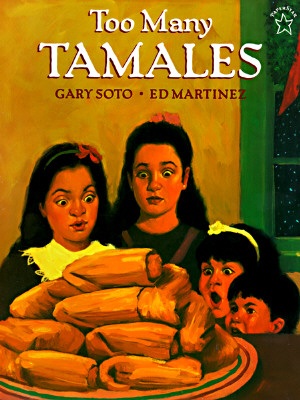 | Soto, G. (1993). Too many tamales. New York: Scholastic. A charming story of playing with things that are best left alone. In this story, Maria helps her mother prepare the Christmas meal of tamales. When left alone, she tries on her mother's ring, which falls off into the batter. After remembering that it fell off into the batter, Maria enlists the help of her cousins, who are visiting for Christmas, to help find the ring. After eating twenty-four tamales, they are unable to find the ring. Forced to tell her mother that she has lost her ring, Maria finds out that her mother found the ring. Since the cousins had eaten all the tamales, Aunt Rosa suggests that they make some more and helps Maria understand that everyone makes mistakes. |
Deedy, C. (2007). Martina the beautiful cockroach, a Cuban folktale. Atlanta: Peachtree Publishers. Who doesn't have an Abuela that offers well meaning advice. In this Cuban folktale, Martina, the cockroach, is ready to get married. After receiving gifts from the other females in her family, Martina receives some very strange advice from her grandmother. As each suitor comes by, she comes to appreciate the advice that she was given. Finally, as she begins to fear that she will not find a husband, she notices a little mouse. Wondering where he came from, grandmother points out that he has always been there. Finding that she has come to like the little mouse, Martina is hesitant to follow through on her grandmother's advice of spilling coffee on his shoes to determine what his temper will be like. Only as she prepares to follow the advice, the little mouse beats her to it. He too has a Cuban grandmother. The illustrations by Michael Austin are absolutely amazing. The colors are so vibrant. The author includes a number of Spanish words, including the definition in context. A delightful tale that I will definitely include in my unit on folk tales. Awards and nominations: 2008 Pura Belpre Medal (honor book) / ALA/ALSC, REFORMA, National Association to Promote Library and Information Services to Latinos 2008 Amelia Bloomer Project Nominee / ALA Booklist, Feminist Task Force 2008 Notable Social Studies Trade Books for Young People / National Council for the Social Studies and the Children’s Book Council | 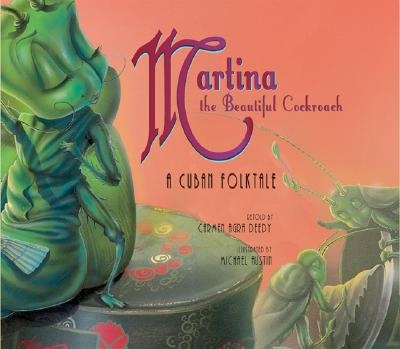 |
 | Alvarez, J. (2001). How Tia Lola came to visit stay. New York: Alfred A Knopf. Miguel, his sister and mother move from New York City to Vermont shortly after his parents divorce. With a new job and a new place, Miguel's mother needs help. she asks Tia Lola, their eccentric aunt, to come and visit from the Dominican Republic. Through the use of food, parties and gifts, she helps Miguel's transition into his new surroundings. I used this as a read aloud for my students. They did not really care for and did not respond to it as they have other texts that I just knew they wouldn't like. According to Publisher's Weekly, Tia Lola's quick transformation from not being able to speak English to a fluent speaker is not really believable. They also sited that the mother's character was not fully developed. In fact, Miguel's relationship with his father is much better developed and he leaves in New York still. |
