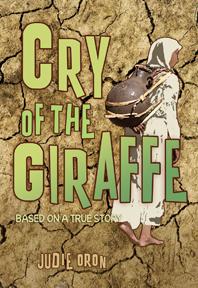
 | Oron, J. (2010). Cry of the giraffe. Toronto, Canada: Annick Press.
Cry of the Giraffe is based on actual events of an Ethopian Jew and her family's journey from Ethopia to Yerusalem. Along the way, they become separated and Wuditu is forced to virtually become a slave until she can find the foreigner that will help her reunite with her family. A beautifully written story about a courageous young woman whose faith is tested time and again. Its a testimony to the resiliency of people whose faith carries them through the good and the bad. I cried for Wuditu as she made her journey to Yerusalem, where she would find not only her family but religious freedom as well. - 2011 USBBY Outstanding International Books Honor List - Sydney Taylor Notable Book for Teens Award - White Ravens Collection, International Youth Library, Munich - Amelia Bloomer Project 2011 List, American Libary Association - YALSA Hidden Gems, American Library Association - Canadian Children's Book Centre, Best Books for Kids and Teens - The 2011 Helen and Stan Vine Canadian Jewish Book Award for Youth Literature
|
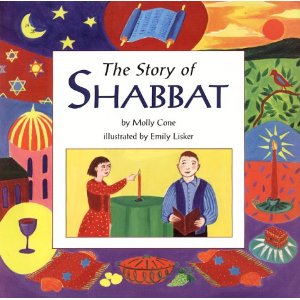
Cone, M. (1966). The story of Shabbat. New York: HarperCollins Publishers. For me, The Story of Shabbar serves as an introduction into the Jewish faith. It tells us of the preparations that are made for the Sabbath and provides a historical background on the faith. Interestingly enough, as I searched for an image, I ran across several reviews that suggested that this would not be a book that should be included on the school library's book shelves.
|  |
 |
Fishman, C. (1997). On Passover. New York, NY: Atheneum Books for Young Readers. Using her senses, a young girl shares her observations as the family prepares and celebrates Passover. She describes what she sees, tastes, hears, says and tastes during this holdiay celebration. This is a fast paced book that allows students to experience not only what may be an unfamiliar celebration but also how we can use our senses to question and observe the things around us.
|
Goldin, B. (2010). Cakes and miracles: A Purim tale. Tarrytown, NY: Marshall Cavendish Children. An amazing tale of a young boy who becomes blind, but does not allow his disability to prevent him from helping his mother, who tries to coddle him and push him into tasks that will accommodate his disability. On night he dreams that an angel tells him to make what he sees, thus he is able to prepare hamantashen so beautiful that all of the villagers want one. While I liked this story, I am not really sure about this holiday based on this story and was unable to find any other books on the subject. I loved the illustrations in the book. They kind of remind me a Tim Burton cartoon, only not as dark. | 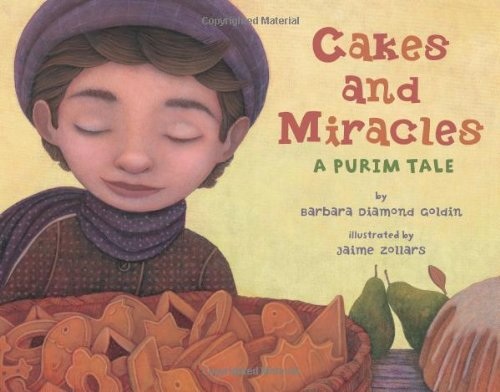 |
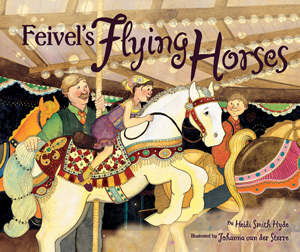 | Hyde, H. (2010). Feivel's flying horses. Minneapolis, MN: Kar-Ben Publishing. Feivel represents an immigrant's story of the struggle to earn enough money to bring his family to America. After struggling with several jobs that don't really pay a lot of money, Feivel is apply to work as a carpenter like he did in the Old Country creating horses for a carousel. They are lovingly created in memory of his family, whose name he carves into the horses. I imagine that this is similar to the story of many other immigrant families during the late 1800s. |
Alphin, E. (2010). An unspeakable crime: The prosecution and persecution of Leo Frank. Minneapolis: Carolrhoda Books. The Murder of Mary Phagan with Jack Lemon (1987) had me fascinated as a teenager. I am not sure if I understood then that this was based on actual events or not, but I was fascinated nontheless. (That's the forensic scientist in me I guess). Imagine my delight upon seeing this book on the shelf. Reading about this miscarriage of justice upset me all over again. Based on the actual events surrounding the death of Mary Phagan, An unspeakable crime takes us through every facet of the case,including the bullying of witness, inciting a mob like environment with falsehoods and innuendos, and perpetuating Southerners fears of Jews and Yankees. Despite his innocence, he was found guilty not only by the jury and public opinion. Sentenced to death, with every appeal denied, Leo Frank had his sentence commuted by Georgia's Governor Slaton. However, Georgians would not be denied their justice and lynched Leo Frank. Political agendas and personal prejudices fueled the fires that killed Leo Frank. The climate of anti-Semitism and misunderstanding of this culture caused Georgians to overlook the obvious and seek the blood of a Jew and not seek the actual murderer of Mary Phagan. | 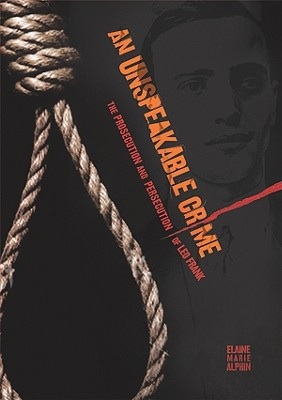 |
